
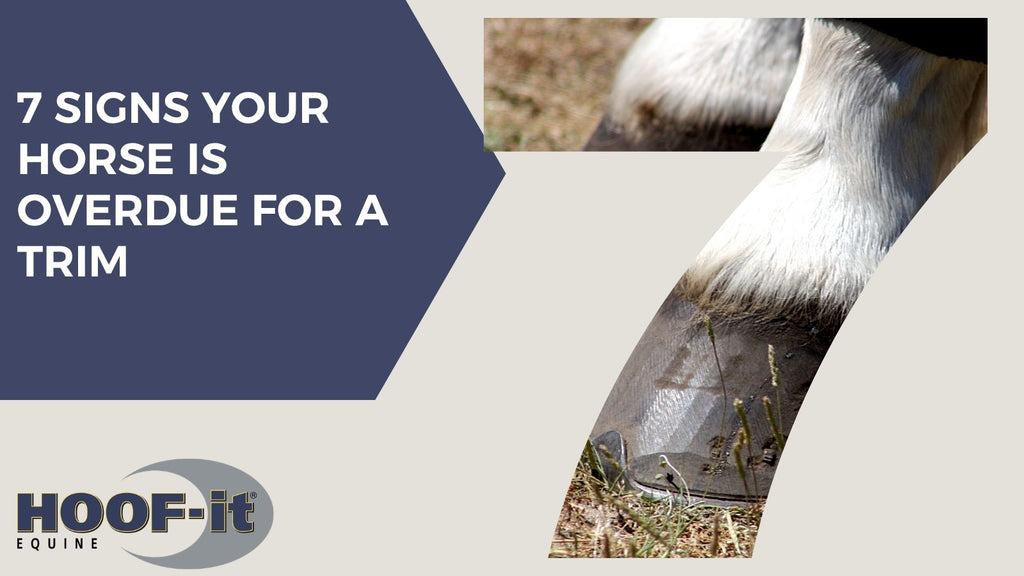
7 Signs Your Horse Is Overdue for a Trim
You've probably heard the saying, "No Hoof, No Horse." It's one of the oldest truths in the horse world, and for good reason. Healthy hooves are the foundation of a sound, happy horse.
But life gets busy. Between work, family, riding, and barn chores, it's easy to let a trimming appointment slide by a week or two. Sometimes that's all it takes for small hoof issues to start turning into bigger problems.
So how can you tell when your horse is overdue for a trim? Here are seven common signs to watch for.
1. Chipping Around the Hoof Wall
A small chip here and there isn't always cause for concern, especially in dry conditions. However, excessive chipping often means the hoof wall has grown too long and is beginning to break away under pressure.
When the hoof becomes unbalanced, every step places additional stress on the wall, increasing the risk of larger cracks and damage.
If your horse's feet are starting to look more like a jagged potato chip than a smooth hoof capsule, it's time to call your farrier.
2. Flaring of the Hoof Wall
Flares occur when the hoof wall begins to spread outward instead of growing straight down.
Not only do flares affect the appearance of the hoof, but they can also weaken the hoof wall and create leverage forces that pull on sensitive internal structures.
Think of flares as your horse's way of saying, "I've been growing unchecked for a while now."
3. Long Toes
Long toes are one of the easiest signs to spot.
When the toe becomes too long, the horse has a harder time breaking over during movement. This can place additional strain on tendons, ligaments, and joints.
Long toes can also contribute to:
- Tripping
- Shortened stride length
- Increased stress on the deep digital flexor tendon
- Delayed breakover
A balanced hoof should support efficient movement. Long toes do the exact opposite.
4. Contracted Heels
Healthy heels should be open and functional.
When trimming intervals become too long, some horses begin developing contracted heels, where the heel bulbs appear narrow and the back of the hoof loses width.
Contracted heels can reduce shock absorption and affect circulation within the hoof.
Your farrier can help identify whether your horse's heels are functioning properly and make adjustments to encourage healthier hoof growth.
5. Changes in Movement
Sometimes the first clue isn't in the hoof itself—it's in how your horse moves.
Has your horse become:
- Short-strided?
- Less willing to move forward?
- Stiff when turning?
- Reluctant to work on certain footing?
These subtle changes can indicate hoof imbalance or discomfort.
Because horses are masters at hiding pain, even small changes in movement deserve attention.
6. Increased Tripping
If your horse suddenly seems to be catching a toe more often on the trail or in the arena, hoof length may be playing a role.
As the toe grows longer, breakover becomes less efficient. This can make it easier for the horse to stumble or trip, particularly on uneven terrain.
Occasional trips happen to every horse. Frequent tripping is a warning sign worth investigating.
7. Cracks Are Starting to Appear
Small cracks can quickly become big problems.
When hoof walls become overgrown and imbalanced, cracks often develop as the hoof attempts to manage excessive stress.
Some cracks are cosmetic. Others can extend deeper into the hoof wall and become painful or lead to infection.
Regular trimming helps prevent many cracks before they start.
Don't Wait Until There's a Problem
One of the biggest mistakes horse owners make is waiting until the hoof looks bad before scheduling a trim.
Preventive hoof care is almost always less expensive—and less stressful—than treating problems after they develop.
Most horses benefit from a regular trimming schedule every 4 to 8 weeks, depending on age, workload, hoof growth, environment, and individual needs.
If you're noticing any of these signs, it may be time to reach out to your farrier and get your horse back on track.
After all, healthy hooves don't happen by accident. They happen through consistent care, regular maintenance, and a good partnership between horse owner and hoof-care professional.
Because at the end of the day, no hoof really does mean no horse.