
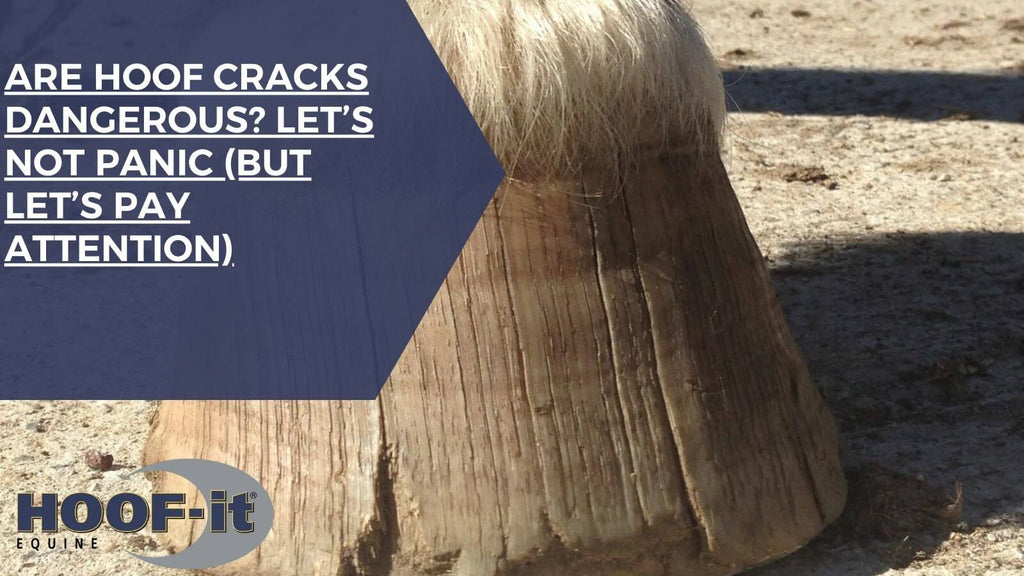
Are Hoof Cracks Dangerous? Let’s Not Panic (But Let’s Pay Attention)
You pick up your horse’s foot.
You see a crack.
Your brain immediately jumps to: “Is my horse about to be lame forever?”
Take a breath.
Hoof cracks look scary, but most of them are not the end of the world. Some matter. Some don’t. The trick is knowing which ones deserve attention—and which ones deserve a calm shrug and a good trim.
So… Are Hoof Cracks Dangerous?
Here’s the honest answer:
👉 Some hoof cracks are just cosmetic.
👉 Some can turn into a problem if ignored.
👉 Very few are an emergency.
A crack is basically your horse’s hoof saying, “Hey, something’s a little off down here.” It’s information—not a diagnosis.
The Two Kinds of Cracks You’ll See Most
Vertical Cracks (Up and Down)
These are the classics.
-
Tiny surface cracks:
Super common. Usually harmless. Often caused by dryness, flare, or overdue trims. -
Deeper cracks:
Less common. These can move, widen, or bother the horse if they’re not managed.
🟢 Straight talk:
Most vertical cracks are not dangerous unless they go deep or make the hoof unstable.
Horizontal Cracks (Side to Side)
These usually show up after:
-
An abscess
-
A bonk to the coronary band
-
A stressful health moment your horse already moved on from
They grow down and out like a bad haircut.
🟢 Straight talk:
Almost always low drama. Time and good hoof care do the work here.
When a Hoof Crack Is a Problem
Pay attention if you see:
-
Lameness (even mild)
-
Heat or swelling in the foot
-
Bleeding, goo, or funky smells
-
A crack that starts at the top of the hoof
-
A crack that keeps getting wider
That’s when you stop Googling and call your farrier—and maybe your vet.
Why Hoof Cracks Happen (Hint: It’s Not Just One Thing)
Hoof cracks usually come from a combo platter of:
-
Long trim cycles
-
Hoof imbalance or flare
-
Too wet → too dry → too wet footing
-
Nutrition gaps
-
Old injuries
-
Plain old hoof genetics
This is why miracle ointments don’t magically fix them. Hooves grow slow, and they remember everything.
How Hoof Cracks Are Actually Managed
Good hoof crack management looks like:
-
Correct trimming to rebalance the foot
-
Staying on a consistent trim schedule
-
Letting cracks grow out instead of chasing them
-
Supporting hoof health from the inside
-
Keeping the hoof clean—not sealed shut
🚫 Pro tip: Gluing, filling, or sealing cracks without guidance can trap bacteria and make things worse.
Can You Prevent Hoof Cracks?
You can’t prevent all of them—but you can stack the deck in your favor:
✔ Regular trims
✔ Reasonable footing
✔ Balanced nutrition
✔ Early attention to small cracks
✔ A horse that stands quietly for hoof care
That last one matters more than people realize. A relaxed horse lets your farrier do better work. Better work = happier hooves.
The Bottom Line (Barn Aisle Version)
Hoof cracks are not automatically dangerous.
They’re common. They’re manageable. And most horses live perfectly sound lives with a crack or two that just… exists.
Watch it. Manage it. Don’t ignore it—but don’t lose sleep over it either.
Your horse’s hooves don’t need perfection.
They need consistency.
Disclaimer: Every horse and every hoof is different. The information shared here is meant to educate—not diagnose or treat. Always work with your veterinarian and farrier to make decisions that are right for your individual horse.