
DIY Hoof Maintenance: What You Can Safely Do Between Farrier Visits
Keep your horse comfortable, sound, and on track—without overstepping your role

Between farrier visits, your horse’s hooves don’t hit pause. They keep growing, collecting debris, adjusting to terrain, and—if you’re not paying attention—quietly developing problems.
The good news? There’s a lot you can safely do at home to maintain healthy hooves, catch issues early, and make every farrier visit more productive.
This isn’t about replacing your farrier. It’s about becoming a better partner in your horse’s hoof care.
🧠 First Rule of DIY Hoof Care: Stay in Your Lane
Before we dive in, let’s be clear:
- You’re maintaining—not reshaping the hoof
- You’re observing—not correcting major imbalances
- You’re supporting—not replacing professional care
Think of it like brushing your own teeth vs. seeing a dentist. Both matter.
✅ What You Can Safely Do at Home
1. Daily Hoof Cleaning (Non-Negotiable)
Pick out your horse’s hooves every day—especially before and after riding.
Look for:
- Packed mud, rocks, manure
- A foul smell (early sign of thrush)
- Black, soft, or crumbly frog tissue
- Heat or sensitivity
This simple habit prevents infections and gives you a daily “health check.”
2. Inspect for Cracks, Chips, and Changes
Run your eyes—and hands—over the hoof regularly.
Watch for:
- Small cracks forming at the wall
- Chipping along the edges
- Changes in shape or balance
- Loose shoes (if shod)
Catching these early can mean the difference between a quick fix and a costly problem.
3. Light Rasping (If You’ve Been Shown How)
If your farrier has shown you how, you can gently:
- Smooth rough edges
- Tidy minor chips
- Maintain a clean mustang roll between visits
Important: This is maintenance—not trimming. When in doubt, leave it alone.
4. Manage Moisture & Environment
Hooves thrive in balance—not too wet, not too dry.
You can help by:
- Avoiding prolonged exposure to mud or urine-soaked bedding
- Providing dry turnout areas when possible
- Using hoof conditioners only if needed (and not excessively)
5. Stay on Schedule (Even If Everything Looks Fine)
One of the biggest DIY mistakes? Waiting too long.
Most horses need farrier care every 4–6 weeks, depending on growth and workload. Even if the hooves “look okay,” internal imbalance can already be happening.
⚠️ What NOT to Do
Skip these unless you’re trained:
- Removing large amounts of hoof wall
- Changing hoof angles or balance
- Treating serious infections without guidance
- Ignoring lameness or sensitivity
When something feels off, call your farrier or vet. Always.
🛠️ The Game-Changer for DIY Hoof Care

Here’s the part most people don’t talk about:
DIY hoof care isn’t hard because it’s complicated—it’s hard because it’s physically demanding.
Holding a hoof between your knees, bending over, trying to balance while your horse shifts… it’s exhausting. And for many horse owners—especially those dealing with back, knee, or strength limitations—it’s the reason consistency falls apart.
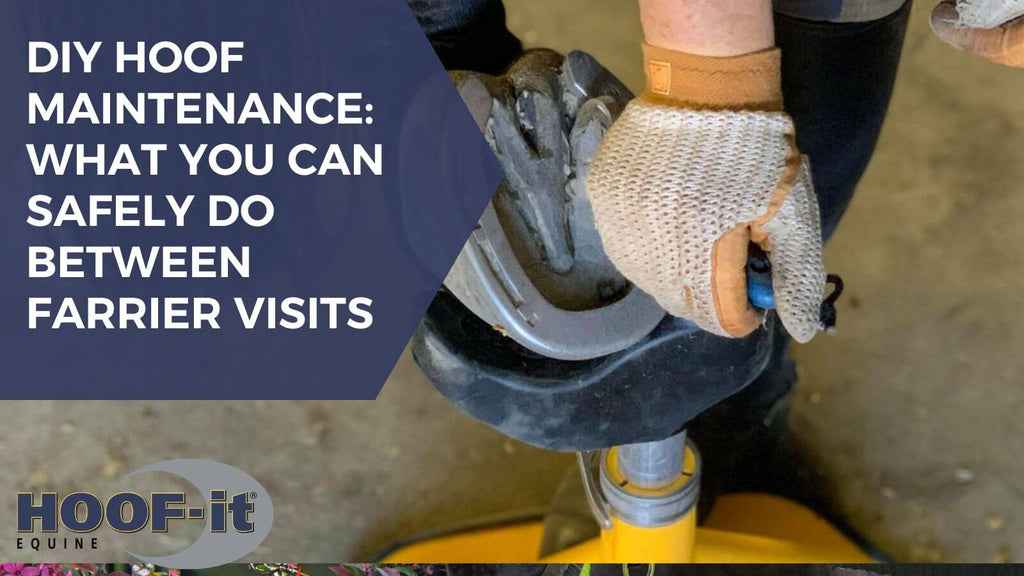
That’s where the HOOF-it® Hoof Stand with PostCradle® changes everything.
Why it makes such a difference:
-
Takes the strain off your body
No more hunching, bracing, or fighting to hold the hoof steady -
Supports the hoof securely
Horses relax when they feel stable—and that means less fidgeting -
Smooth transitions between tasks
The PostCradle® design lets you move from cleaning to light rasping without constantly repositioning -
Perfect for everyday horse owners
You don’t need to be a farrier—or built like one—to take care of your horse’s hooves properly -
Encourages consistency
When it’s easier on your body, you actually do it more often—and that’s where the real health benefits happen
Whether you’re doing a quick pick-out or tidying up between visits, having the right setup turns hoof care from a struggle into a routine.
🐴 Consistency Is Everything
You don’t need to do everything—you just need to do the right things regularly.
A few minutes a day:
- Prevents infections
- Reduces farrier workload
- Keeps your horse comfortable
- Saves you money long-term
And with the right tools supporting you, it becomes something you can keep up with—no matter your strength or experience level.
🧾 The Bottom Line
DIY hoof maintenance isn’t about doing more—it’s about doing what matters, safely and consistently.
Pick, check, maintain, and stay on schedule.
And if your body has ever been the reason you’ve skipped a day? There’s a better way to make hoof care easier—for both you and your horse.
Because good hoof care shouldn’t wear you out—it should work with you.