
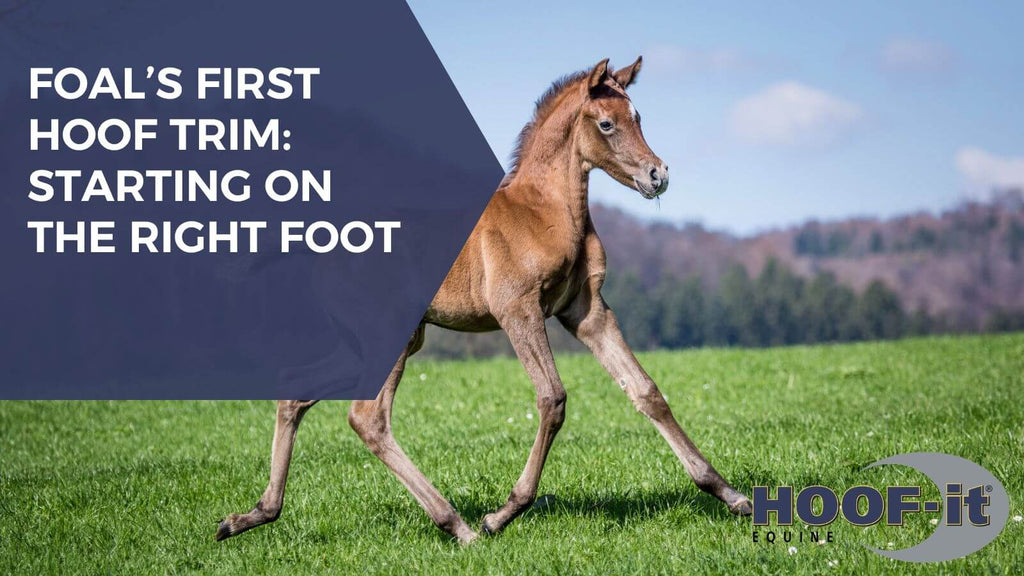
Foal’s First Hoof Trim: Starting on the Right Foot
There are plenty of memorable “firsts” with a new foal—the first wobbly steps, the first playful buck, and the first time they discover that the feed bucket is far more interesting than anything else in the pasture.
Then comes another important milestone: the first hoof trim.
A foal’s first trim may not be quite as adorable as those early pasture zoomies, but it plays an important role in their long-term soundness. It also begins teaching the foal that having their feet handled is simply part of life.
When Should a Foal Have Its First Trim?
Foals should have their hooves evaluated soon after birth. The first actual trim is often performed within the first few weeks of life, but there is no single schedule that is right for every foal.
Some foals may need attention earlier because of hoof imbalance, uneven wear, an angular limb concern, or a conformational issue. Others may need very little trimming at first. Your veterinarian and farrier can work together to decide what is appropriate for the individual foal.
Young hooves grow quickly, and early imbalances may influence how the legs develop. That is why regular evaluations are important—even when the foal’s feet appear perfectly normal to the untrained eye.
Why Early Hoof Care Matters
The goal of an early trim is not to dramatically reshape the hoof. It is to make small, thoughtful corrections while supporting balanced growth and movement.
Regular hoof care can help:
-
Maintain an even, balanced hoof
-
Address flares, chips, or uneven wear
-
Support healthy limb development
-
Identify potential concerns early
-
Prepare the foal for a lifetime of farrier visits
Foals change quickly. A hoof that looks balanced today may look different after a growth spurt, which is why routine checks matter as much as the trim itself.
Preparation Begins Before the Farrier Arrives
The best first trim starts well before trimming day.
From the beginning, gently handle the foal’s legs and feet for a few seconds at a time. Run your hand down each leg, ask the foal to lift the hoof, hold it briefly, and place it back on the ground quietly. Keep these sessions short, calm, and positive.
Do not turn hoof handling into a wrestling match. A foal does not need to hold a foot up for several minutes. At this stage, a few quiet seconds can be a big success.
It also helps to teach the foal basic leading, standing, and personal-space manners. Your farrier will appreciate working with a youngster who has already learned that people are allowed to touch their legs.
What to Expect During the First Trim
For the first appointment, choose a quiet, familiar location with secure footing and as few distractions as possible. The mare should remain nearby if her presence helps the foal stay calm.
An experienced farrier will usually keep the process efficient. They may inspect the foal standing square, watch the foal walk, pick up each foot, and remove only the amount of hoof needed to improve balance.
The session may be brief—and that is perfectly fine. The first visit is partly about hoof care and partly about building trust. A calm, successful experience is far more valuable than trying to accomplish too much in one appointment.
Never sedate a foal or give any medication without direction from your veterinarian.
Safety for the Foal, Handler, and Farrier
Foals are small, but they are quick, surprisingly strong, and not always predictable. Safety should come first.
-
Use an experienced handler.
-
Work in a safe area with good footing.
-
Avoid loud activity and unnecessary commotion.
-
Keep sessions short enough that the foal does not become exhausted or frustrated.
-
Let the farrier know about any handling difficulties in advance.
-
Never punish a frightened foal for trying to find its balance.
A young foal is still learning how to stand on three legs. Patience and realistic expectations go a long way.
How Often Should a Foal Be Trimmed?
Many foals benefit from being evaluated every three to four weeks during periods of rapid growth, although the ideal interval varies. Hoof growth, turnout, footing, conformation, wear, and any limb concerns will all affect the schedule.
Your farrier may decide that only a light touch-up is needed—or that no horn needs to be removed at a particular visit. Regular appointments allow small adjustments to be made before a minor imbalance becomes more difficult to manage.
If you notice uneven hoof wear, cracking, a sudden change in how the foal stands or travels, heat, swelling, or lameness, contact your veterinarian and farrier rather than waiting for the next routine appointment.
Start Small and Build Good Habits
A foal’s first hoof trim should not be a dramatic event. With early handling, a patient farrier, and a sensible schedule, it can be a short and positive introduction to lifelong hoof care.
The habits established now matter. A foal who learns to stand quietly and offer each foot safely is easier on the farrier, safer for the handler, and better prepared for every trim that follows.
At HOOF-it®, we believe good hoof care begins with safe handling, the right equipment, and respect for both the horse and the hoof-care professional. Start early, keep it positive, and help your foal step confidently into the future—one tiny hoof at a time.