
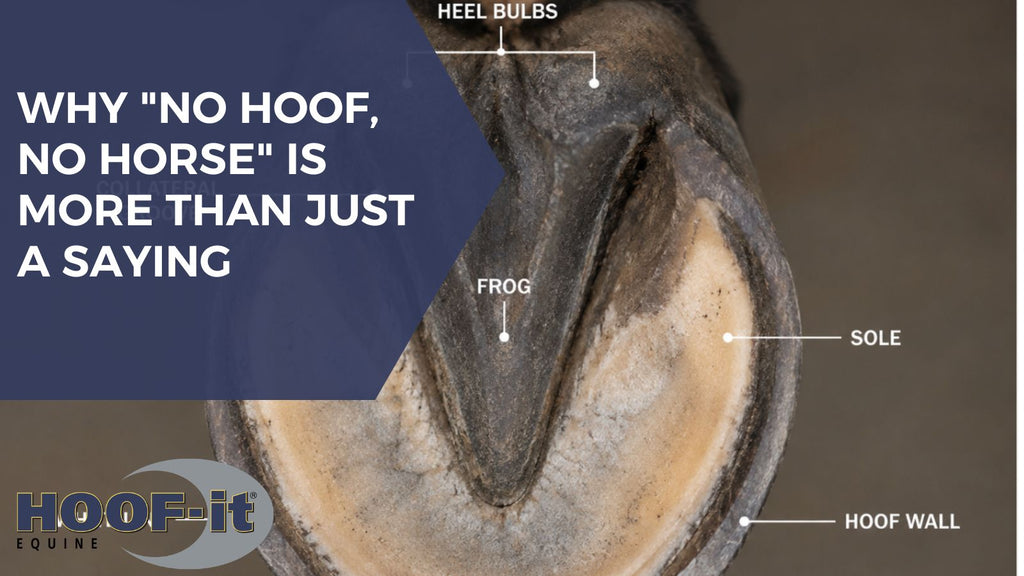
Why "No Hoof, No Horse" Is More Than Just a Saying
Every horse person has heard the phrase, "No hoof, no horse."
It's one of those old sayings that gets repeated so often it can start to sound like a cliché. But the truth is, few statements in the horse world are more accurate.
Whether you're riding a Grand Prix jumper, a backyard trail horse, a ranch horse, or a beloved retiree, everything your horse does begins at the ground level—with healthy hooves.
The Foundation of Every Step
A horse's hoof is an incredible structure. It absorbs shock, supports thousands of pounds of force, promotes circulation, and provides traction on a variety of surfaces.
When the hoof is healthy, the horse moves comfortably and efficiently. When it's not, even the most talented horse can struggle.
Imagine trying to run a marathon in shoes that don't fit. That's what many horses experience when hoof care is neglected.
Small Problems Become Big Problems
One of the challenges with hoof health is that minor issues can quickly become major ones.
A small crack can spread.
A touch of thrush can become a painful infection.
An overdue trim can alter a horse's balance and movement.
Because horses naturally hide discomfort, many hoof problems aren't obvious until they begin affecting performance or causing lameness.
That's why consistent hoof care is far more effective—and less expensive—than trying to fix problems after they've developed.
Performance Starts from the Ground Up
Every stride your horse takes relies on proper hoof balance.
Poor hoof balance can impact:
- Joint health
- Tendons and ligaments
- Muscle development
- Stride length
- Overall soundness
Many performance issues that appear to be training problems can actually have their roots in discomfort caused by the feet.
When horses are comfortable, they move more freely, perform more willingly, and stay sounder longer.
Hoof Care Is More Than Trimming
Regular trims or shoeing appointments are essential, but good hoof care doesn't stop there.
Horse owners should also monitor:
- Daily hoof condition
- Thrush and bacterial infections
- Cracks and chips
- Loose shoes
- Changes in hoof growth
- Diet and nutrition
- Environmental conditions
Simple daily observations often catch issues before they become costly veterinary or farrier visits.
Your Farrier Is a Key Member of Your Team
The best hoof care happens when owners, farriers, trimmers, and veterinarians work together.
A skilled hoof-care professional doesn't just trim feet—they evaluate balance, identify developing concerns, and help keep horses comfortable and performing at their best.
Giving your farrier a safe, cooperative horse and the right tools can make every appointment more productive for both horse and professional.
Investing in Hoof Health Pays Off
Horse owners spend thousands of dollars on saddles, supplements, training, and show fees. Yet none of those investments matter if the horse isn't comfortable on its feet.
Healthy hooves contribute to:
- Better performance
- Improved comfort
- Reduced risk of injury
- Longer athletic careers
- Happier horses
The old horsemen who coined the phrase "No hoof, no horse" understood something that remains true today: everything starts with the feet.
The next time you pick out your horse's hooves, remember that you're not just cleaning dirt from a foot. You're caring for the very foundation that supports every ride, every trail adventure, every competition, and every moment you share together.
Because when the hoof is healthy, the horse has the best chance to thrive.